
Skip to content

Open Source

Blog posts tagged with Open Source
Add your suggestions to "What Came Next"

Add your suggestions to "What Came Next"

22/03/2015
One Day the World Ended is designed to be an open source and collaborative work of fiction. Most of this will come later when I have more material ready, but <a href="https://github.com/ChrisChinchilla/One-Day-the-World-Ended-Jekyll" target="_blank">the code of the website is on GitHub</a> and you're more than free to issue pull requests if you want to.
Reporting back from Container Days Hamburg

Reporting back from Container Days Hamburg

22/09/2021
Nestled amongst the port of Hamburg, the sound of cranes loading containers of a different kind onto vast cavernous ships, I’m at my first in-person conference in about 18 months. It’s taking place on an old cargo ship, the HMS Bleichen (German), a ship obsoleted by the arrival of containerization and now home to talks about containers of a different kind.
The open source tracing landscape

The open source tracing landscape

28/10/2021
Distributed tracing tools help you track a request through an application or system that consists of multiple applications, services, and infrastructure. This gives you a deeper understanding of what is happening within the system through graphical representations of how much time the request took on each step. A span is the building block of any distributed trace, with each component in a service contributing a span to the distributed workflow. There are a handful of well known open source tracing tools, and another handful of lesser known ones. Most work in similar ways, with one or two nuanced differences, and this post walks through most of them to help find the right tracing tool for you.
The 2026 Observability Audit - Separating Single Vendor Silos From Community Innovation

The 2026 Observability Audit - Separating Single Vendor Silos From Community Innovation

26/08/2026
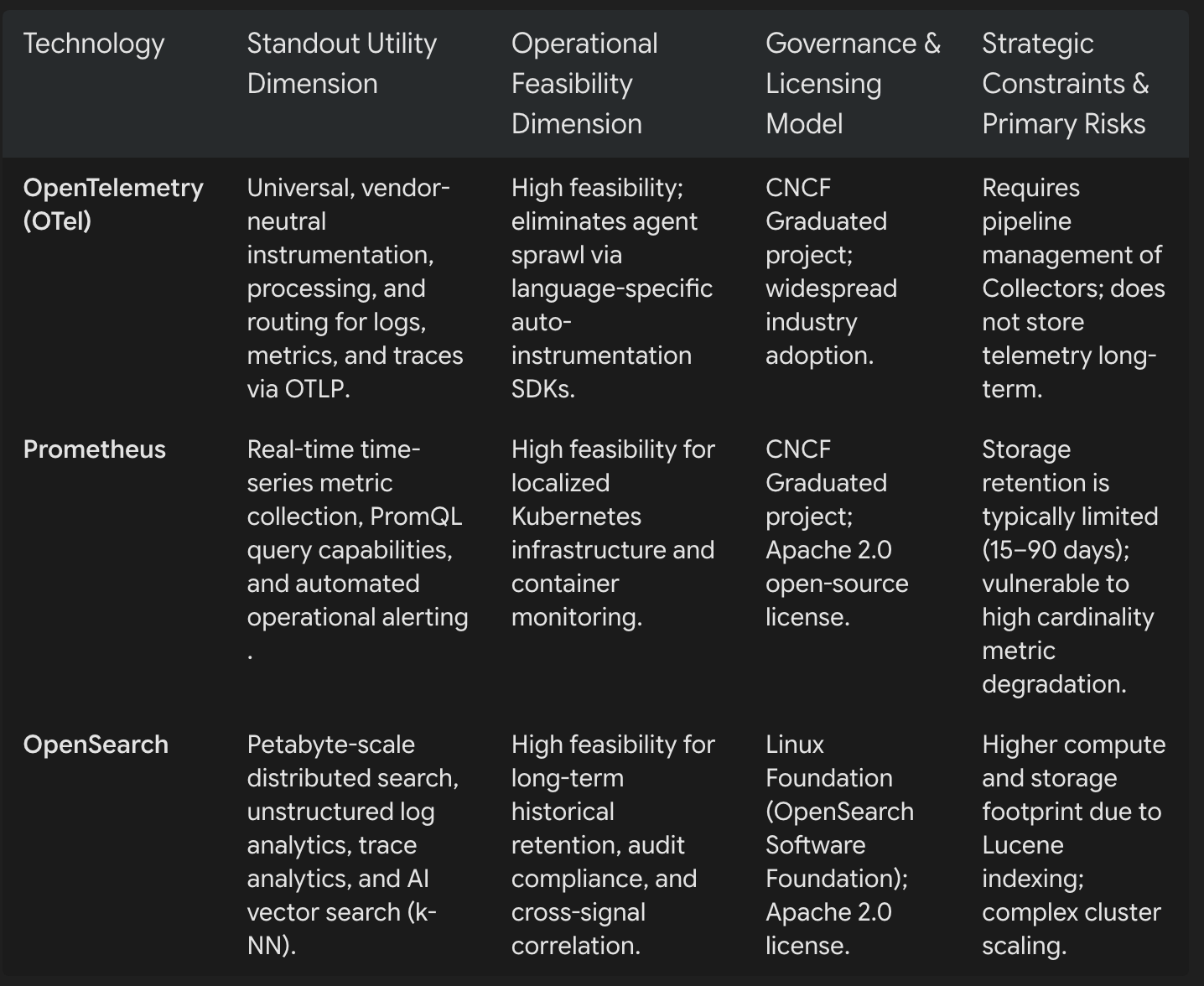
Open source projects dominated by a single vendor are a hallmark of "open source in name only." Rather than filling the traditional role of open source fostering innovation and decision-making from a diverse community, "open source in name only" projects are often used as marketing tools for proprietary platforms. These projects are also seen as riskier than community-driven projects because a single vendor is more apt to abruptly terminate long-term support, restrict contributions, or switch from an open-source license to a more restrictive one (forcing some previous contributors to pay for the project they helped build). In these projects, critics claim that investments are often lopsided and heavily skewed toward onboarding, marketing, and brand-related support. As a result, technical contributions are frequently less developed, opaque, undocumented, or lacking in real substance, often manifesting merely as a superficial "ease of entry and onboarding." Because of these underlying gaps in documentation and codebase depth, developers are routinely forced to reverse-engineer functionality simply to get the tools to work correctly.

Join my mailing list

My roughly fortnightly newsletter, sent via Substack.

Latest issue: Don't let the Sun go down on Open Source (24/09/2026)

View archive