It's a sobering time to be a mobile developer, with both app and device sales down. Personally, I feel this is just the maturation of a new(ish) industry, and everything will work out eventually. But, noticing major dents in their revenue, the major players are clearly worried.
It's taken moving to a non-English speaking country to realize how wide spread and common place the English languages is in the World. This has piqued my interest in learning about the origins of our bastard tongue and how it got to this position.
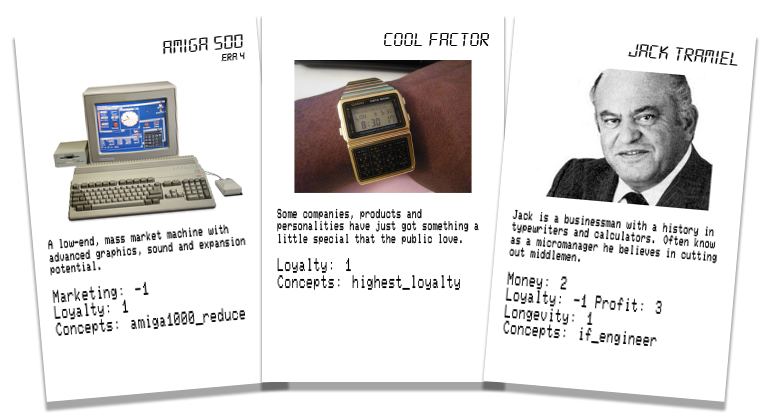
I loved this book and couldn't stop reading it, which was a pain as I mostly read before going to sleep. The book takes an era by era look at how the video games and movie industries have tried to collaborate together, and largely failed.
I recently read <https://www.bfilipek.com/2016/05/coding-without-google.html> about a Developer's workflow before the proliferation of the internet, search engines and developer websites. It reminded me of an idea I had wanted to write about for a while and this blog post prompted me to drag it off my todo list.
Like many of my age and generation, I started learning to program with BASIC. These were the days when you bought magazines full of pages and pages of code for games or basic applications. You spent hours with your friends painstakingly typing these programs into a computer to find there was a typo, or the game didn’t work, and then giving up. It was more about hanging out with your friends, whilst your parents felt like you were learning something.
Another year, another IO. Google made a slew of announcements, from their own foray into the assistant arena, to several curious devices and apps. Few of these have details or any API access for developers, so SitePoint will cover those at a later date. If you’re interested in reading more, I recommend Google’s official IO blog post.
Call me old-fashioned, but I have always preferred using a desktop app suited to each purpose. I feel that if all I'm going to use is a browser for everything I do, then why have a 'proper' computer? On a practical level, I travel frequently and am generally 'between' internet connectivity or using unstable internet connections, and 'real' applications are typically far better at allowing effective offline working.
Last weekend I was back in Tirana for my second OSCAL, an awesome little open source conference that has a massively diverse audience and punches well above it's weight. Whilst in Albania I was conducting some interviews and research for a forthcoming article on the Albanian (likely also including Kosovo) startup and tech scene(s), but more of that later. When I visited Albania last year it was my first trip to a Balkan country and since then I have visited Serbia (twice) and Croatia. Last year, everything was new and novel, this trip I was seeing beyond that into things I might have missed.
Like many of my age and generation, I started learning to program with BASIC. These were the days when you bought magazines full of pages and pages of code for games or basic applications. You spent hours with your friends painstakingly typing these programs in to a computer to find there was a typo, or the game didn't work, and then giving up. It was more about hanging out with your friends, whilst your parents felt like you were learning something.
Silicon Allee asked me if I would like to contribute some posts to their Medium publication and I thought what better to write than resurrect something I used to do back when I was living in Melbourne. I go to a lot of meetups. I enjoy meeting people, hearing what they're working on and being exposed to new ideas. Writing something about every talk I see each week would take a long time, so instead I will just tell you who I saw, what they spoke about and what you can do to find out more.
Crate.io focuses on database simplicity and horizontal scalability. We aim to make scaling your data from millions to billions of records and beyond as simple as possible.
There's no denying that whilst Bitcoin's future may be hazy right now, the underlying technology it relies upon -- the Blockchain -- has revolutionized many industries and projects, with more to come.
I'm excited about Swift for reasons I will expand upon later, but it's mostly the enthusiasm it has attracted. In less than six months, here are the project's GitHub stats.
Attend any tech-related event or read any tech-related article over the past 18 months, and you will likely have heard of Docker and have an inkling of what it is and does.
OK, I'm late again, but this time I have a decent excuse. My Wife has been in Hospital the past week and it has thrown my planning and timing. By pure coincidence, it leads me nicely to the topic I wanted to discuss this installment based on a presentation I have given twice. The topic is physical and mental health for developers.
Images enhance any interface and can help engagement and interaction with your users. In this video we will look at how to load and display images from a remote location via an API and the Volley library. We will look at two methods for loading images and how to layout and format images in an interface.
Chip Shop has been a labour of love for me over the past two years. It has been through many changes and revisions and isn't yet 100%, but I have always needed to get something live before it becomes a never ending process of 'polishing'.
I go to a lot of events. Firstly because I get bored easily, but mainly because I like hearing what people are working on and their ideas. I have noticed an increasing amount of companies and events that label themselves as 'tech', and I challenge if they actually are. To me it feels like some older phrases that are slowly dying and losing their meaning.
Not since the shuttering of Google Reader has there been quite so many outcries of surprise and annoyance amongst tech fans. Facebook's announcement that their popular developer service platform, Parse, will shut in a years time caused ripples of panic amongst developers who rely on it. It's always been a bad idea to be too reliant on a centralized, commercial service as it may not always last for ever. Parse wont be the first or the last to close and it's a good lesson to us all to be flexible.
I make no pretense that I am a generalist and get bored quickly. I have written before about how this sometimes makes you feel left out, or worse, an idiot who has wasted their life. I want to explore this topic in more detail, and that of 'tech tribes', that I feel it relates to.
Your app is ready, the next steps are to get it into the Google Play Store for people to download and use. In this video we look at preparing your application for release and creating a listings page for your creation.
I apologise for the delay in this installment of the Weekly Squeak, I let various things get the better of me in the past weeks and am annoyed that I did. First the madness of a series of events, conferences and travel and then I got hit by a crippling cold-flu thing that has made me struggle to get even the work I needed to get done complete, let alone the things I wanted to do. I had a topic I wanted to cover in this post, but I think I will save it for the future and instead talk about some of the questions and issues that have arisen as a consequence of these past weeks.
In this video you'll be building upon previously learned techniques by taking data imported via API and displaying it to the interface. We'll learn how to get into the API data, get it into a usable format, and then once it is properly formatted, attach that data to the interface to make a usable implementation of the API data that, in this example, you are fetching from the Marvel API.