
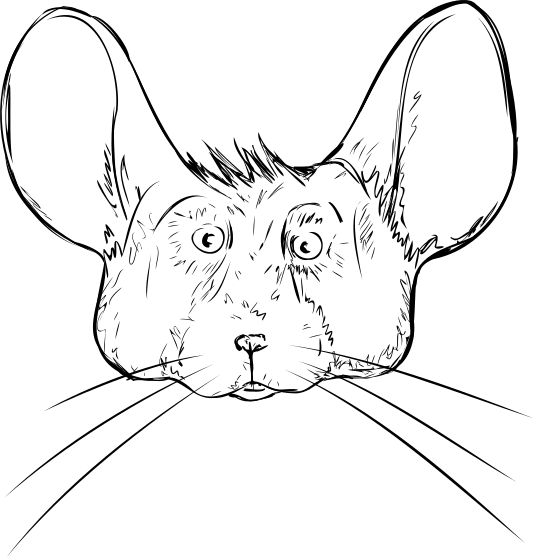
Museum of Antiquities

“Over here, you can see a particularly fine example of an early 21st-century relic. I believe they called them ‘smartphones’”.
The guide pointed at a plinth floating before us, a black slab of primitive plastic hovering above it. The crowd moved in to stare intensely at it. There were faded remnants of text scratched on the back, “SIMSANG”, or something like that. It gleamed and shone in the bright lights of the museum, and half the group were already bored with it.
“As far as we can tell, back in the 20th century, these were either essential medical devices or religious objects as images from the era show that people used them most of the time and needed them to answer questions, find their way around, and keep in touch with everyone.”
The crowd oohed in disbelief. How did people cope back then with not having access to all information inherently and instantly?
“Just one second.” Said the guard, pressing a projected button they conjured in the air. The screen of the device flashed to life, and after a few tedious seconds, during which the crowd lost interest, a row of bright-coloured icons paraded across the screen.
“How did they use them?” Asked a youngling at the front of the group.
“I believe they would use their fingers.” Said the guide, anticipating the looks of disgust spreading across the assembled faces.
“Physical interaction? That’s gross!” Declared an oldling at the back. The rest of the crowd nodded along in agreement and disgust.
“It’s so… small.” Said another front, staring at the tiny screen. “How did their fingers fit?”
The guard summoned an image of a hairless ape-like creature in front of them. People were used to seeing these in history books, but they felt more visceral “in situ”. “People were a lot smaller then,” The guide said.
“What are those square things on the screen?” Said another youngling, sticking their pudgy face close enough to make them out.
“They called them ‘icons’” said the guard. “They tapped them to open, what they called an ‘app’”.
The crowd looked confused by the concept, gesticulating in the air with stubby, unused fingers, trying to understand how such an interaction would work.
“The strangest aspect of all…” said the guide, the crowd craning in to listen. “…was that these devices would often last less than a day, and people would need to plug them into something to keep them going. Often desperately.”
The crowd looked shocked. “But… But… How did they survive without access to information for that time?” Said one middling, voicing the fear of the whole crowd.
“Well.” Said the guard, building to their final, dramatic, climactic point. “They would have to talk to someone!” Said the guide to the shocked and silent room.
If you like what you're reading, support my work

Scrivener is the go-to app for writers of all kinds, used every day by best-selling novelists, screenwriters, non-fiction writers, students, academics, lawyers, journalists, translators and more.
Get Scrivener
Grapple git without the grief and try Tower, the best graphical interface for git on macOS and Windows.
Try Tower for free